The Complete Process and Benefits of Single Tooth Implants
Jump to Section:
Losing a single tooth—whether due to trauma, decay, or gum disease—can have long-lasting effects on your smile and your oral health. It can cause surrounding teeth to shift, reduce bite efficiency, and even lead to bone loss in your jaw over time. A single tooth dental implant offers a natural-looking, stable, and long-term solution that restores both function and appearance.
At Today’s Dental Grande Prairie, we’ve helped many patients rebuild their confidence and oral health with dental implants. This guide explains what’s involved in the process and why it’s considered the most reliable choice for replacing a missing tooth.
What Is a Single Tooth Implant?
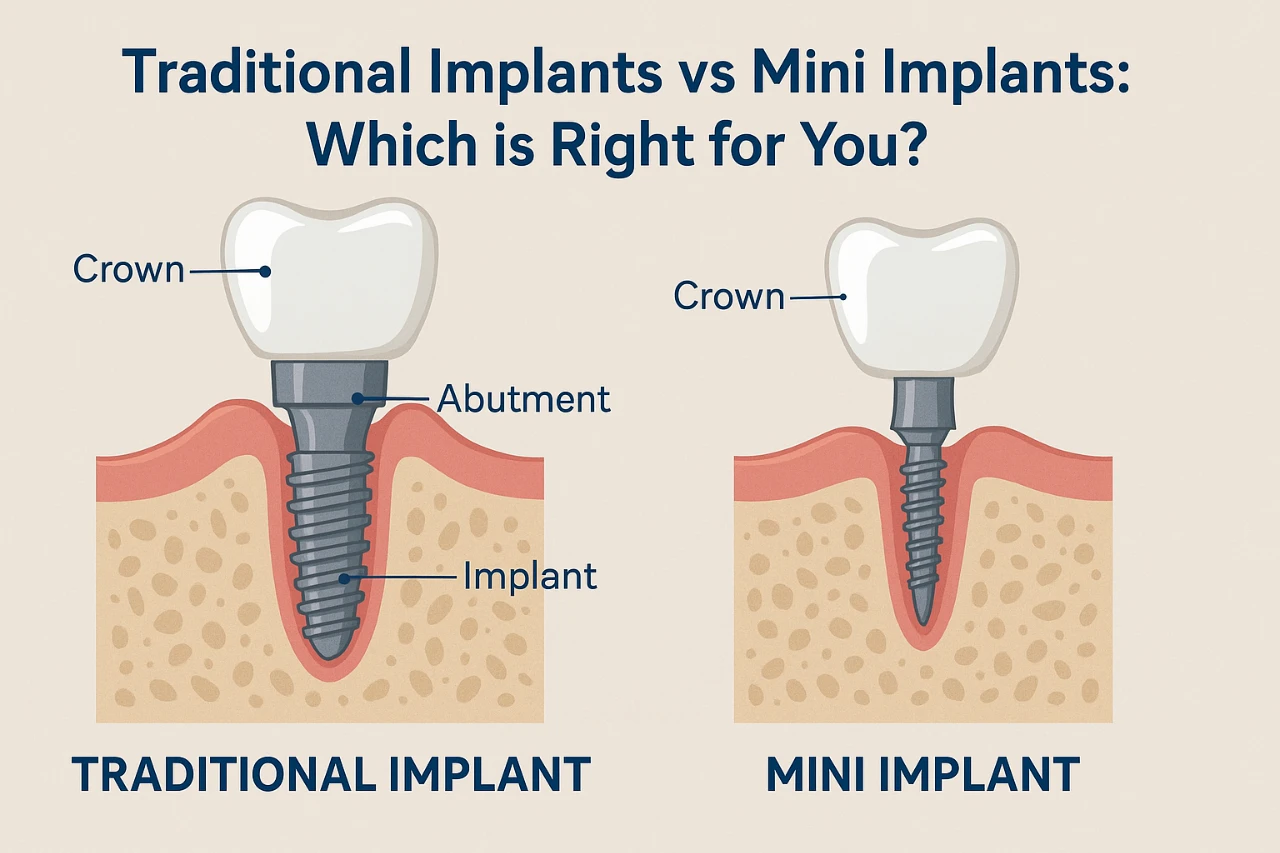
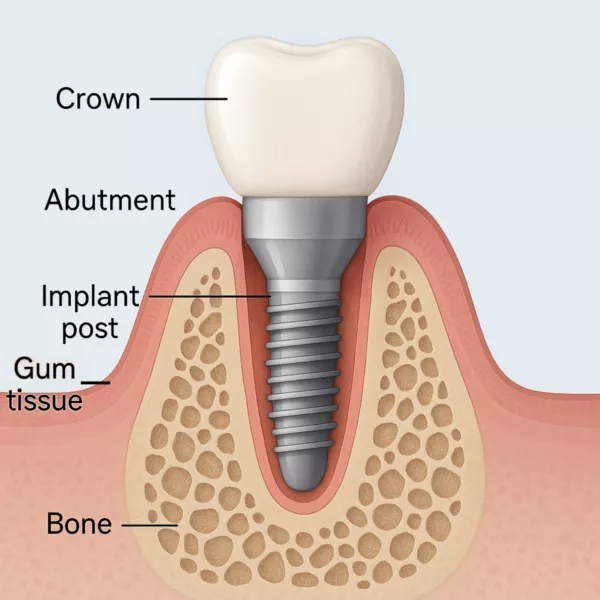
A single tooth implant is a standalone tooth replacement that replicates the structure of a natural tooth. It consists of three components:
- Titanium implant post, placed into the jawbone
- Abutment, which connects the post to the restoration
- Custom dental crown, designed to match your existing teeth
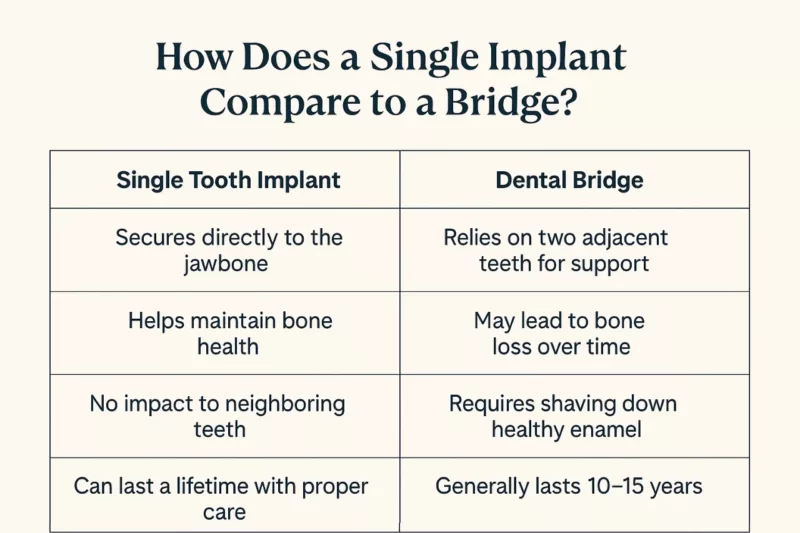
Unlike traditional dental bridges, which rely on adjacent teeth for support, implants are self-sufficient and preserve the integrity of surrounding healthy teeth.
Who Makes a Good Candidate?
If you’re missing one tooth and have healthy gums and sufficient bone volume, you’re likely a strong candidate for a dental implant. Where bone has receded, a graft may be necessary to strengthen the implant site. Bone grafting may be necessary to ensure implant success.
We also consider systemic health factors like smoking, diabetes, or autoimmune conditions. These don’t necessarily rule out implants but do require more careful planning and follow-up.
The Complete Process: Step-by-Step
1. Comprehensive Consultation
We start with a detailed examination, digital scans, and 3D imaging to assess bone density and create a personalized treatment plan. This may include reviewing past dental history, discussing sedation preferences, and outlining each step of care.
2. Implant Placement
The implant is surgically inserted into the jawbone. This is usually done with local anesthesia and takes less than an hour. Titanium is the material of choice because of its excellent biocompatibility and success with osseointegration—the process where the implant bonds with the surrounding bone tissue.
3. Healing and Osseointegration
Over the next 3 to 6 months, the implant integrates with your jawbone. This forms a stable foundation much like a natural tooth root. We may place a temporary crown for appearance while healing occurs.
During this phase, maintaining excellent oral hygiene and attending follow-up visits is essential. We use imaging to monitor bone integration and gum health at regular intervals.
4. Abutment Placement
Once healing is complete, a small connector called an abutment is attached to the implant. This requires a minor in-office procedure and serves as the support structure for your final crown.
5. Crown Restoration
The final step is placing the crown. We take digital impressions to fabricate a lifelike restoration that matches the color, shape, and size of your natural teeth. Once the crown is placed and adjusted for comfort, the implant process is complete.
Advantages Over Other Treatment Options
Long-Term Stability
Single implants typically last 20 years or longer with proper care. Unlike bridges, which may need replacement every 7–10 years, implants offer long-lasting value.
Natural Appearance and Function
Implants look, feel, and function just like your own teeth. They restore full chewing ability, which can improve digestion and nutritional health.
Jawbone Preservation
One of the biggest advantages is the stimulation of the jawbone. When a tooth is lost, the bone begins to shrink. An implant halts this process, helping preserve facial structure and prevent premature aging. Learn more about how long dental implants last.
No Damage to Neighboring Teeth
Bridges require grinding down adjacent teeth for support. Implants leave surrounding teeth intact and are ideal for maintaining long-term oral health.
Easy Maintenance
Implants don’t require special cleaning solutions or adhesives. Daily brushing, flossing, and regular dental checkups are all that’s needed.
What About Bone Loss?
Bone loss is a common consequence of tooth loss and can complicate implant placement. If we detect significant bone thinning, a graft may be recommended to create a suitable foundation for your implant. You can learn more here.
Single Implants Vs Dental Bridge Options
Dental bridges are often used for single tooth replacement, especially when time or budget are concerns. However, there are key differences:
To understand your full set of options, visit our page on dental bridges.
Potential Risks and How We Manage Them
As with any surgery, there are risks—including infection, implant loosening, or insufficient bone fusion. At Today’s Dental, we reduce these risks through:
- Advanced digital diagnostics
- Guided implant surgery
- Pre- and post-operative care
- Ongoing follow-up appointments
Read more about this in our article on implant failure and treatment options. We also follow best practices from the Canadian Dental Association.
Why Patients in Grande Prairie Trust Today’s Dental
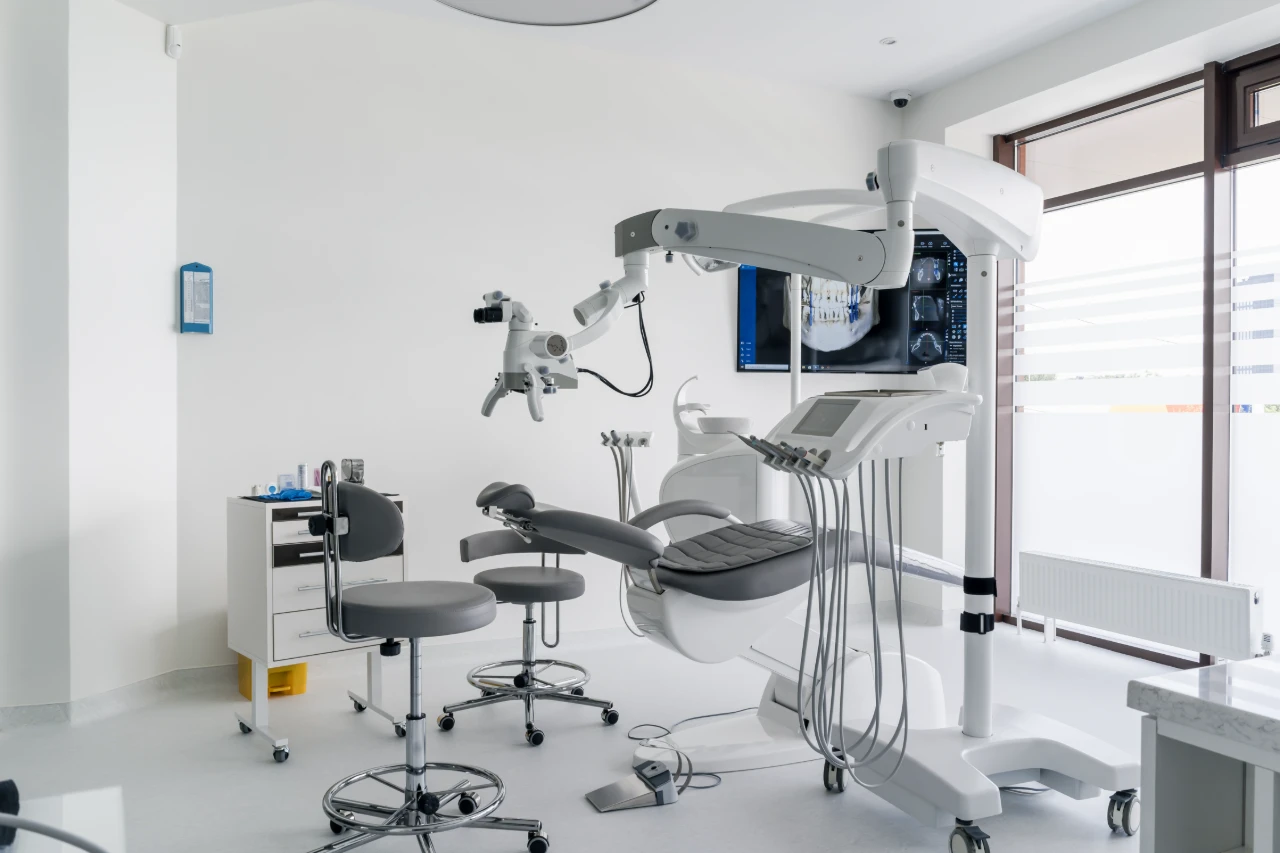
From initial assessment to final crown, our experienced team handles every stage of your dental implant treatment in-house. We use CBCT imaging, guided surgery, and premium restorative materials to deliver results that look great and last. Our patient-first approach means we take the time to answer questions, explore options, and create a treatment plan tailored to your goals.
Key Takeaway
A single tooth implant is more than just a cosmetic fix—it’s a long-term investment in your oral and overall health. It helps preserve bone, maintain proper bite function, and restore confidence in your smile. At Today’s Dental Grande Prairie, we offer the technology, experience, and personal care to make the entire process seamless and effective.
Book a consultation today and let’s talk about whether a single tooth implant is right for you.