
Root Canals in Grande Prairie
Over 490 ⭐⭐⭐⭐⭐ Google Reviews!
Trusted by Grande Prairie families since 2012
We’re Your Smile Experts
Save your natural tooth with gentle, modern root canal therapy. A root canal removes infected or damaged pulp from inside a tooth, relieves your pain, and lets you keep your own tooth — no extraction, no gap, and no implant required.
Lead by Dr. Don Beeson, our team has:

What Are Root Canals?
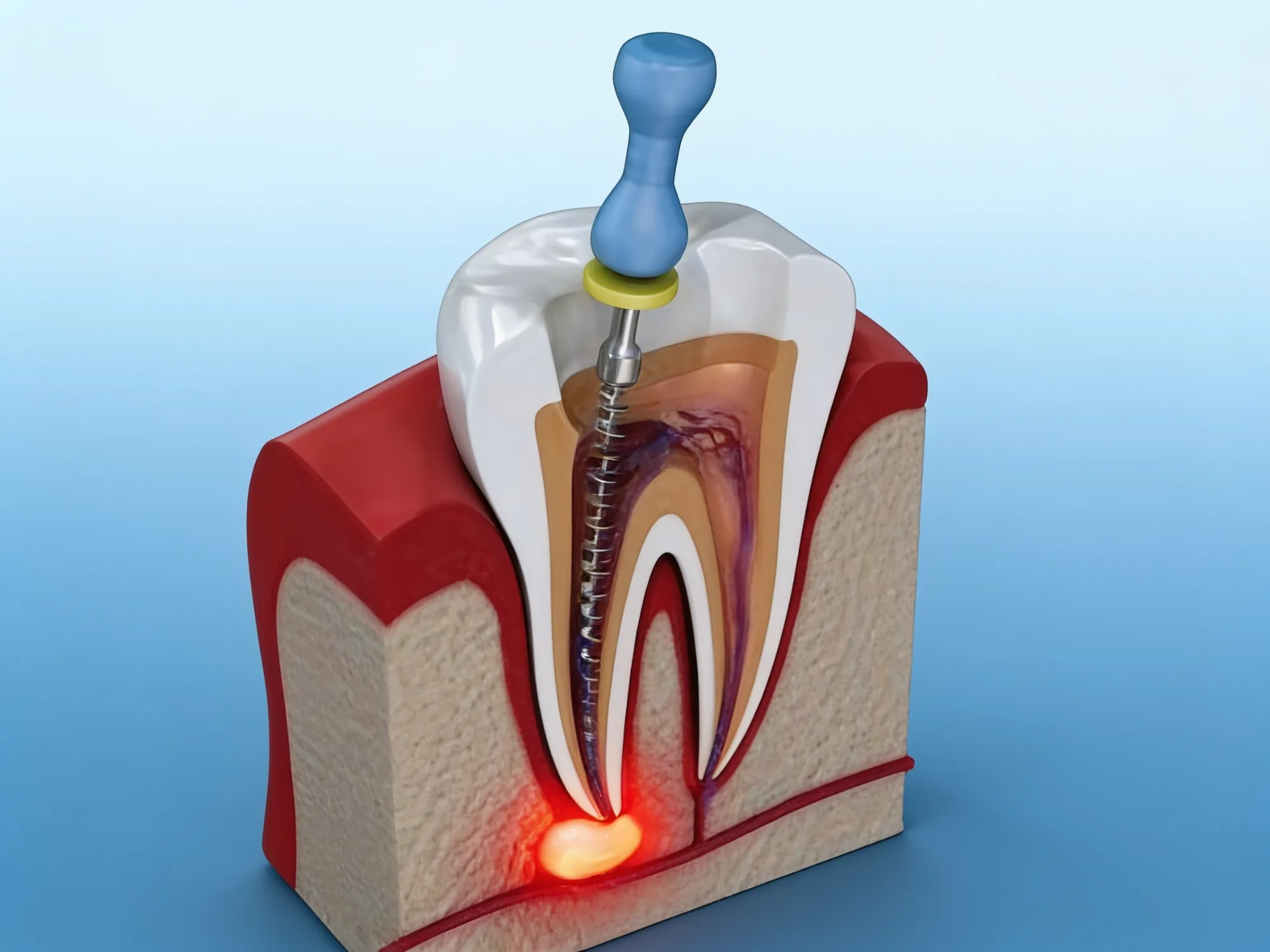
A root canal is a procedure that removes the infected or inflamed pulp — the soft tissue and nerve — from inside a tooth. Once the pulp is cleaned out, the canals are disinfected and sealed, and the tooth is restored, usually with a crown. This clears the infection and lets you keep a tooth that would otherwise have to be extracted.
A root canal treatment involves:

Why Choose a Root Canal Over an Extraction
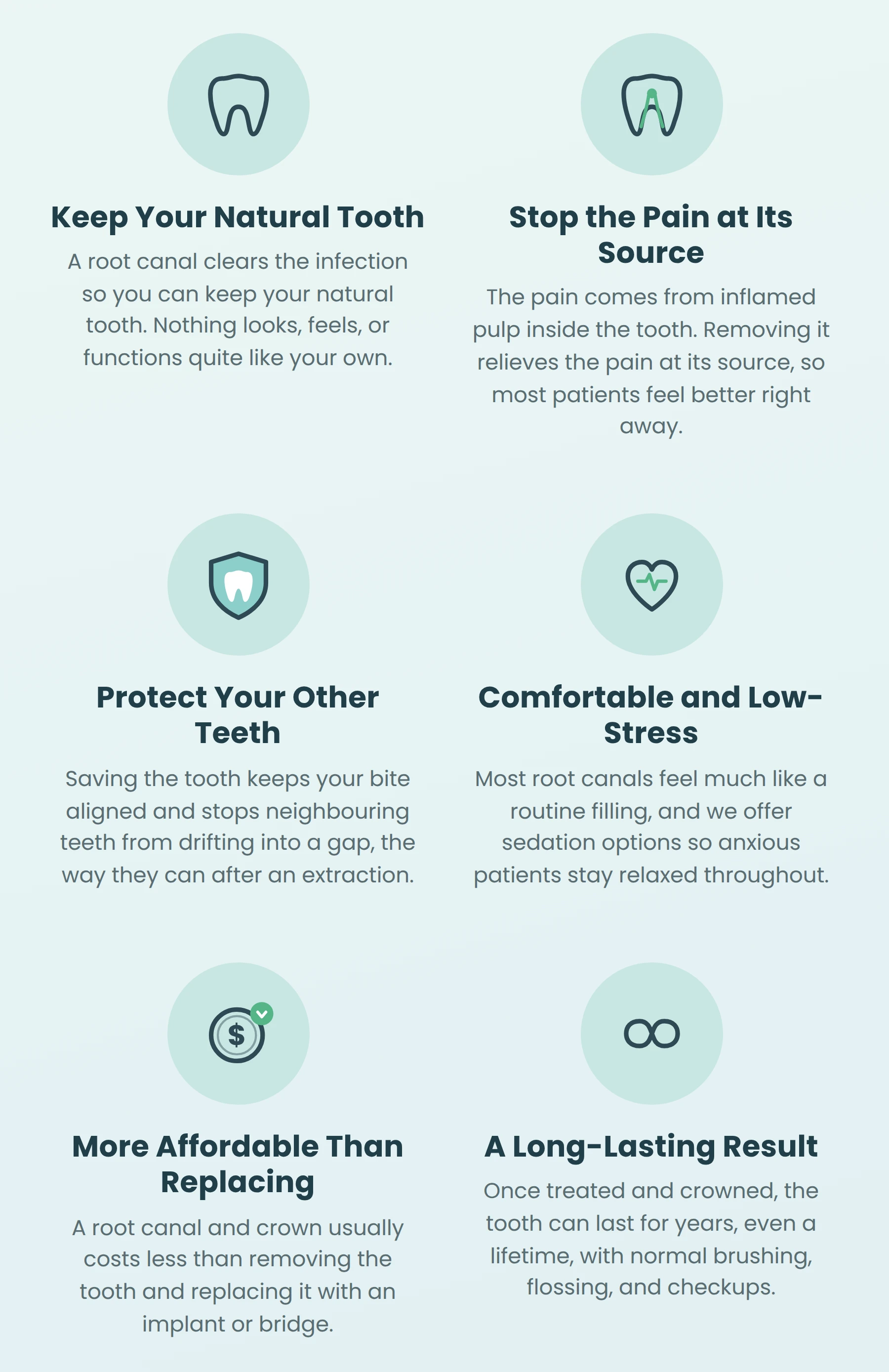
Keep Your Natural Tooth
Nothing looks, feels, or functions like your own tooth. A root canal removes the infection so you can keep your natural tooth instead of replacing it.
Stop the Pain at Its Source
The pain of an infected tooth comes from the inflamed pulp inside it. Removing that pulp relieves the pain at its source — most patients feel better right away.
Protect Your Other Teeth
Saving the tooth keeps your bite aligned and stops the neighbouring teeth from drifting into a gap, the way they can after an extraction.
Comfortable and Low-Stress
Most root canals feel much like getting a routine filling. For patients who feel anxious, we offer sedation dentistry services so treatment is always comfortable.
More Affordable Than Replacing
A root canal and crown usually costs less than removing the tooth and replacing it with an implant or bridge — while keeping your own tooth in place.
A Long-Lasting Result
Once treated and crowned, the tooth can last for years — even a lifetime — with normal brushing, flossing, and regular checkups.
Who Is a Good Candidate for a Root Canal?
Most people with a damaged, deeply decayed, or infected tooth are good candidates for a root canal. The goal is always to save your natural tooth whenever the surrounding structure is healthy enough to support it.
The best way to know if a root canal is right for you is an exam with Dr. Beeson. We’ll review your symptoms, take any X-rays needed, and explain your options clearly and without pressure.
A root canal may be right for you if you have:

What to Expect During a Root Canal
A root canal is a straightforward procedure that’s usually completed in one or two visits. Here’s exactly what to expect from start to finish.
Most root canals are completed in one or two visits, and we keep you comfortable at every step — many patients are surprised how easy it is.
Why Patients Trust Today’s Dental for Root Canals
A root canal is a precise procedure. At Today’s Dental, Dr. Beeson uses digital X-rays and modern techniques to remove the infection thoroughly and protect your tooth for the long term — no guesswork, no surprises.
We offer oral and IV sedation for patients who feel anxious, so comfort is never a barrier to treatment. From your first consultation through your final crown, everything is coordinated in-house by the same team who knows your case.
With 495 verified Google reviews and a reputation built over more than a decade serving Grande Prairie, we let our patients speak for themselves.
We follow the Alberta Dental Fee Guide, direct bill on your behalf, and offer financing options so cost is never a reason to delay treatment you need.


From a single aching tooth to complex retreatments, Dr. Beeson guides every root canal patient through treatment from first visit to final restoration, all under one roof.
Dr. Beeson personally reviewed and approved the information on this page on June 28, 2026 to ensure accuracy and reflect current clinical standards at Today’s Dental Grande Prairie.
Questions? Ask away!



Common Root Canal Questions
With modern anaesthetic, a root canal feels much like getting a filling. Most patients are comfortable during treatment and relieved that the pain that brought them in is gone.
Saving your natural tooth is almost always the better choice. Nothing works as well as your own tooth, and a root canal is often more affordable than extracting and replacing it.
With a proper crown and good oral hygiene, a tooth treated with a root canal can last a lifetime.
Most root canals are completed in one or two visits, with each appointment lasting about an hour.
Usually, yes. A crown protects the treated tooth from cracking and restores its full strength, especially on back teeth.