Why Might Bone Grafting Be Necessary with Dental Implants
Jump to Section:
When you’re considering dental implants, bone grafting is often part of the conversation. This additional procedure plays a key role in the success of many implant treatments, though it’s not always necessary for everyone. Understanding why your dentist might recommend bone grafting can help you feel more confident about your treatment plan.
The Foundation for Successful Implants
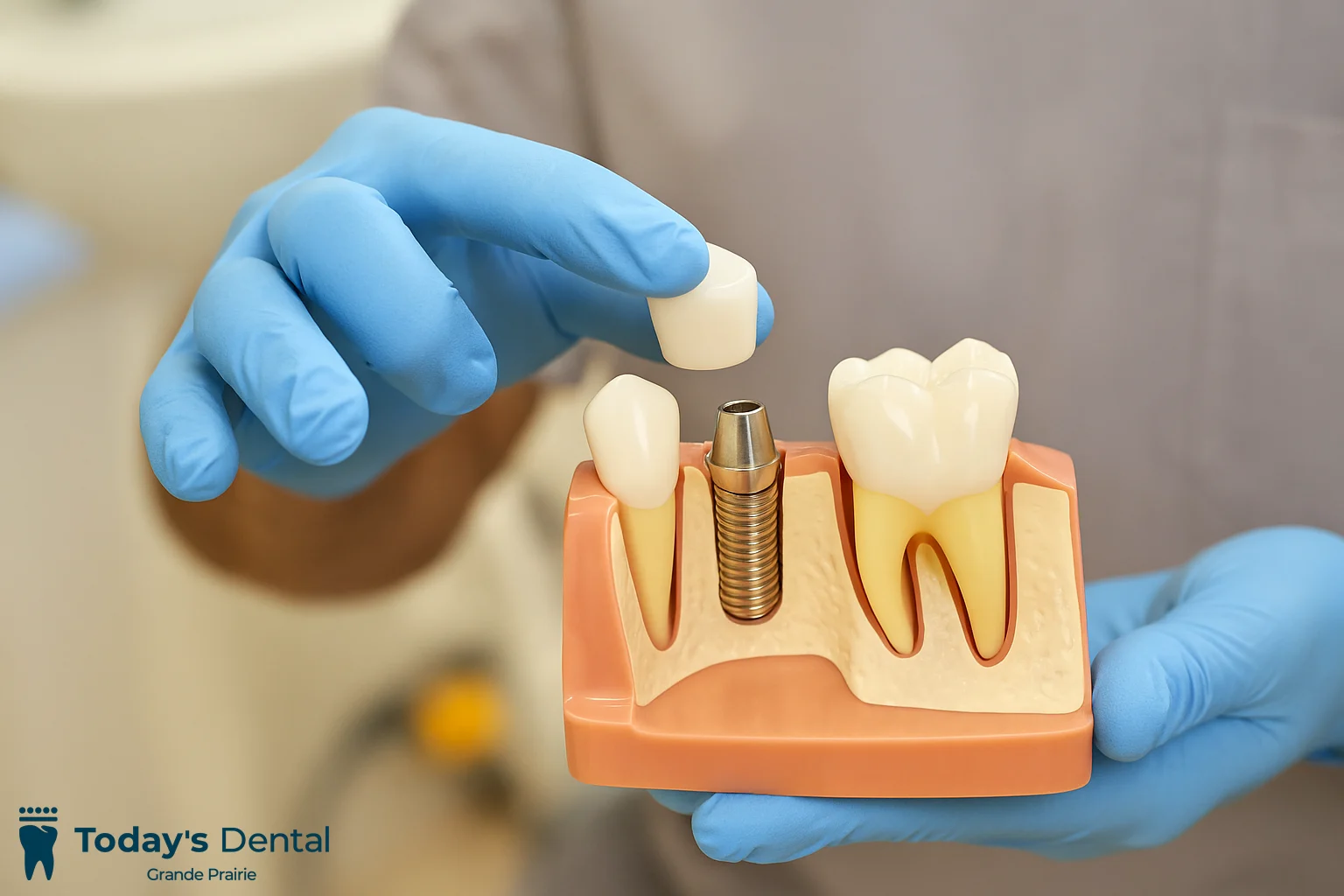
Dental implants need a solid foundation of bone to support them. Think of the jawbone as the soil and the implant as a tree root. Just as a tree needs good soil to grow strong, an implant needs healthy bone to stay secure.
When you lose a tooth, the bone that once supported it begins to shrink. This natural process, called resorption, happens because the bone is no longer receiving stimulation from chewing forces. Within just a year of tooth loss, you can lose up to 25% of bone width in that area, according to Canada’s public health guidelines on bone health.
If you’ve been missing teeth for some time, or if you had gum disease before the tooth was lost, you may no longer have enough bone volume for a safe implant. That’s where bone grafting in Grande Prairie comes in.
What is Bone Grafting?
Bone grafting is a procedure that helps rebuild bone where it has thinned or shrunk. The graft material—either from your body, a donor, an animal source, or synthetic—acts as a scaffold your body uses to grow new bone over time. The procedure starts with prepping the area, placing the graft, and securing it with a protective membrane. Then, the real magic happens during the healing phase, when your body integrates the new material and builds volume in the jaw.
Why Bone Grafting Might Be Needed
There are a few common reasons you might need grafting before your implant. Waiting too long after tooth loss can lead to natural bone deterioration. Trauma or injury to the jaw might have weakened the structure. Long-standing gum disease can erode bone, and in some cases, a person is simply born with a thinner or less dense jaw. Additionally, if the implant is going into the upper jaw near the sinus cavity, a sinus lift—a specialized graft—is sometimes needed to create space.
Types of Bone Grafts
Your Grande Prairie dentist will use an autograft, using your own bone, often from the chin or hip, and generally heals well. An allograft uses bone from some areas of your own jaw. In extreme cases bone from from other parts of your body can be utilized. There are also synthetic options designed to mimic natural bone and stimulate new growth.
What the Timeline Looks Like
Yes, bone grafting will add some time to your dental implant process. First comes the grafting procedure. Then you’ll wait three to four months for the graft to heal and bond. After that, the implant is placed. It will need another three to four months for the implant to fully integrate with your bone—a process called osseointegration. In some cases, these procedures can be done at the same tiome. Only then is the final crown or restoration placed. It’s a long game, but a worthwhile one. If you’re wondering how painful the dental implant process is, most patients report that it’s surprisingly manageable.
Will It Work?
Bone grafting is a tried-and-true procedure with excellent success rates. Your outcome will depend on several factors: your general health, whether or not you smoke (as Health Canada notes, tobacco interferes with healing), how closely you follow aftercare instructions, and the experience of your dental team in Grande Prairie.
If you’re still weighing options, it might help to compare dental implants vs veneers, especially if your tooth loss is cosmetic.
Are There Alternatives?
For some patients, alternatives can work just as well—sometimes better. Short or narrow implants can be placed where bone is limited. Zygomatic implants bypass the jaw and anchor into the cheekbone. Then there’s the All-on-4 implant technique, which uses only four implants to support an entire arch and often eliminates the need for grafting altogether. Not everyone qualifies for these, but they’re worth discussing.
What About the Cost?
It’s true: bone grafting adds to your overall implant investment. Alberta Health won’t typically cover it, but private dental insurance might. We also offer payment plans and tips to reduce dental care costs.
Skipping necessary bone grafting to save money is risky—if the implant fails due to poor bone support, you could end up paying far more down the road. We’ve seen it before, often when patients end up needing treatment for dental emergencies that could have been avoided.
Sometimes, It’s Not Needed
Not everyone needs a bone graft. If the implant is being placed right after tooth extraction, or if the area still has enough healthy bone, you might go straight to implant placement. People with naturally dense jawbones and no history of infection or disease are also good candidates for skipping this step.
Key Takeaway
Bone grafting isn’t a setback—it’s a smart investment in the future of your smile. A little extra healing time now can mean decades of healthy, secure implants ahead.
If you’re still curious, check out more helpful insights like how poor oral health affects your whole body or simple steps to get healthier teeth.
At Today’s Dental Grande Prairie, we’re here to guide you, answer your questions, and make sure you feel confident every step of the way.