Traditional Implants vs Mini Implants: Which is Right for You?
Jump to Section:
Understanding Traditional Dental Implants
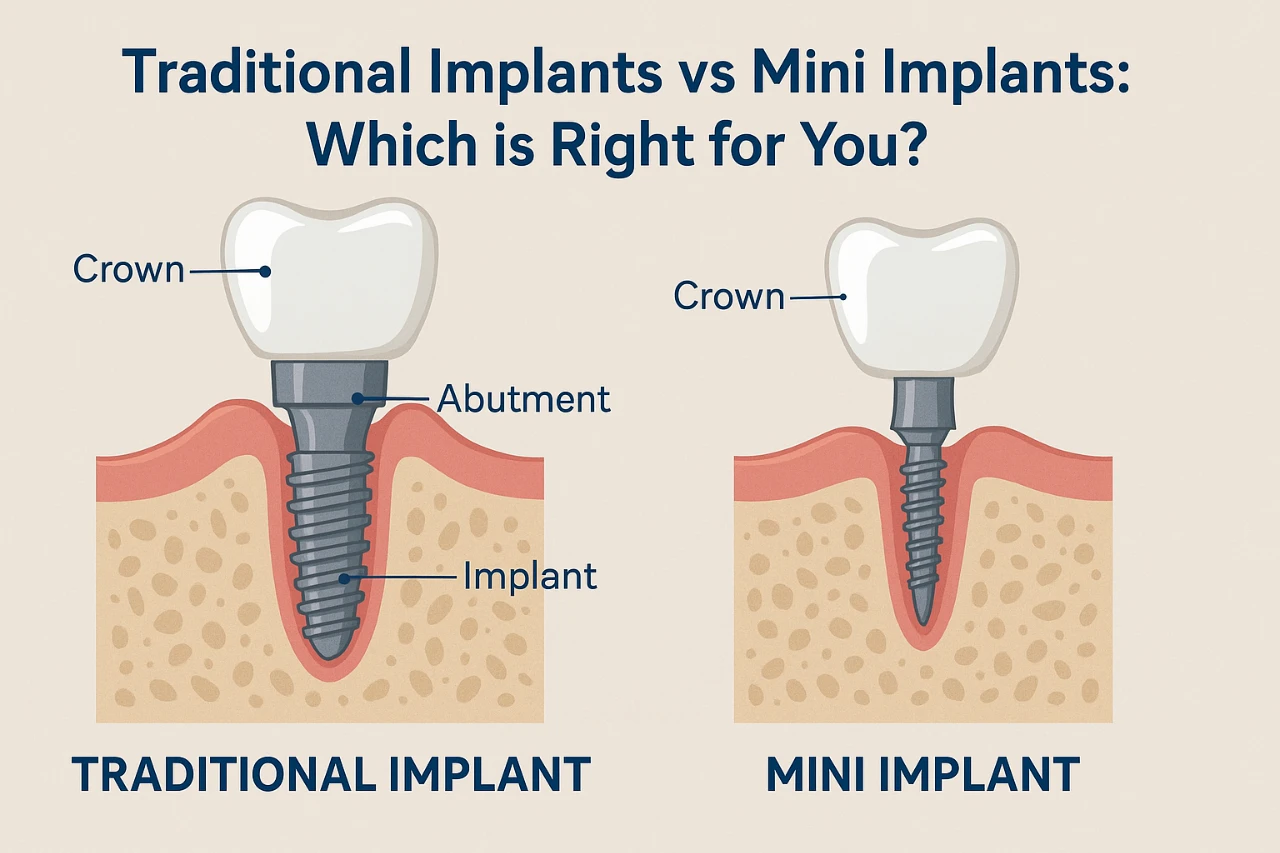
Traditional implants represent the gold standard in tooth replacement technology. These robust titanium posts measure between 3.5 to 6 millimeters in diameter and typically range from 8 to 16 millimeters in length. Their substantial size provides exceptional stability and strength, making them suitable for replacing any tooth in your mouth.
The placement process involves creating a precise surgical site in your jawbone where the implant integrates over several months. This osseointegration process creates an incredibly strong foundation that can support everything from single dental crowns to full arch restorations.
Traditional implants excel in high-stress areas like molars, where significant chewing forces occur. Their larger surface area distributes these forces effectively throughout your jawbone, preventing overload and promoting long-term success. Studies consistently show success rates exceeding 95% for traditional implants when properly placed and maintained.
Exploring Mini Dental Implants
Mini implants, also called narrow-diameter implants, measure less than 3 millimeters in diameter. Despite their smaller size, these implants pack impressive strength and offer unique advantages in specific situations. Their one-piece design often combines the implant post and abutment, simplifying the treatment process.
The reduced diameter allows placement in areas with limited bone width without requiring bone grafting procedures. This makes mini implants particularly appealing for patients who want to avoid additional surgery or have medical conditions that complicate healing.
Mini implants work exceptionally well for stabilizing lower dentures, supporting small teeth like lateral incisors, or serving as temporary anchors during orthodontic treatment. Their minimally invasive placement often allows immediate loading, meaning you might leave the office with functional teeth the same day.
Comparing Placement Procedures
Traditional implant placement typically requires a more involved surgical procedure. After numbing the area with local anesthesia (and sedation options if desired), we create a precise osteotomy in your jawbone. The implant is carefully positioned, and the surgical site is closed to allow healing. Most patients experience a healing period of 3-6 months before receiving their final restoration.
Mini implant placement often involves a less invasive approach. The smaller pilot hole required means less tissue disruption and often shorter healing times. Many mini implants can be placed through the gum tissue without requiring surgical flaps, reducing post-operative discomfort and swelling.
Both procedures can be performed comfortably in our Grande Prairie office. The choice between them depends more on your specific anatomy and treatment goals than on comfort considerations, as both can be managed effectively with appropriate pain management techniques.
Ideal Candidates for Each Option
Traditional implants work best for patients with adequate bone density and width. If you’re replacing a molar or premolar, traditional implants provide the strength needed to handle significant chewing forces. They’re also preferred for supporting multiple teeth through dental bridges or full arch restorations.
Mini implants suit patients with narrower jawbones who want to avoid bone grafting procedures. They work well for replacing smaller front teeth, stabilizing existing dentures, or providing support in areas where traditional implants won’t fit. Patients with certain medical conditions that affect healing might also benefit from the less invasive mini implant approach.
Age alone doesn’t determine candidacy for either option. We’ve successfully placed both types in patients ranging from young adults to those in their 90s. Your overall health, bone quality, and treatment objectives matter more than your birth date.

Longevity and Maintenance Considerations
Traditional implants boast an impressive track record, with many lasting 25 years or even a lifetime with proper care. Their larger size and surface area provide excellent stability and resistance to mechanical stress. Research supports their long-term predictability across various clinical situations.
Mini implants, while newer to the market, show promising longevity results. However, their smaller diameter means they handle stress differently than traditional implants. In high-force areas, multiple mini implants might be needed to distribute loads effectively.
Both types require similar maintenance routines. Regular brushing, flossing, and professional dental cleanings keep your implants healthy. Avoiding tobacco use and maintaining good overall health also contribute to long-term success regardless of implant type.
Cost and Timeline Differences
Mini implants often cost less initially due to their simpler design and less invasive placement procedure. However, if multiple mini implants are needed to replace what one traditional implant could handle, the cost advantage may diminish.
Timeline differences can be significant. Mini implants often allow immediate or early loading, meaning you might receive your replacement teeth sooner. Traditional implants typically require longer healing periods but offer greater long-term stability.
When evaluating costs, consider the total investment over time. Both options may qualify for financing through our partners, including PayBright and iFinance Dental, making quality tooth replacement accessible regardless of your budget.
Making Your Decision
The choice between traditional and mini implants isn’t about finding the “best” option overall – it’s about finding the best option for your unique situation. Factors like bone density, tooth location, chewing habits, healing capacity, and personal preferences all influence this decision.
During your consultation, we’ll examine your mouth, review imaging studies, and discuss your goals to recommend the most appropriate approach. Sometimes, a combination of both types provides the optimal solution for complex cases.
Don’t let analysis paralysis delay your treatment. Both traditional and mini implants offer significant advantages over living with missing teeth or struggling with ill-fitting dentures.
Key Takeaway
Traditional implants excel in strength and longevity, making them ideal for replacing larger teeth and supporting complex restorations. Mini implants offer less invasive placement and quicker treatment timelines, perfect for specific situations like denture stabilization or narrow bone ridges. The right choice depends on your individual anatomy, treatment goals, and healing capacity rather than a one-size-fits-all approach. Both options can successfully restore your smile when placed by experienced professionals who properly evaluate your needs.
Ready to explore which implant option suits your needs? Contact Today’s Dental Grande Prairie at 8200 100 St Unit 110, Grande Prairie, AB T8V 6H7 to schedule your comprehensive implant consultation. Our team will help you understand your options and create a treatment plan tailored specifically for your smile restoration goals.