Orthodontics in Grande Prairie
Orthodontic Care for the Whole Family
Crowded teeth, gaps, and bites that do not meet properly are common, and they affect children and adults alike. If you have ever wondered whether your teeth could sit straighter or your bite could feel more comfortable, orthodontics is the branch of dentistry that answers that question. At Today’s Dental in Grande Prairie we look at how your teeth fit together, explain what we see in plain language, and help you decide what is worth doing about it.
This page covers what orthodontic treatment corrects, when a bite is worth having checked, what the treatment options look like, and what happens at a consultation.
What Orthodontic Treatment Corrects
Orthodontics is about position and fit, not appearance alone. Teeth that are crowded, spaced, rotated, or tipped are the most visible part of it, and they are only part of the picture. The way your upper and lower teeth meet, which dentists call your bite, matters just as much.
A few patterns come up again and again. An overbite means the upper front teeth cover the lower front teeth too far. An underbite is the reverse, with the lower teeth sitting ahead of the upper ones. A crossbite happens when some upper teeth close inside the lower teeth instead of outside them. An open bite leaves a gap between the front teeth even when the back teeth are closed together.
These patterns deserve attention because they do more than change how a smile looks. Crowded and overlapping teeth are harder to clean thoroughly, which raises the risk of decay and gum problems in the spots a brush cannot reach. A bite that meets unevenly can wear enamel down in particular places, tire the jaw muscles, and make chewing less comfortable than it should be. Straightening teeth is often as much about protecting them as it is about how they look.
When to Have a Bite Checked
There is no single right age to ask about alignment, but there are useful moments to raise it.
For children, the years when baby teeth and adult teeth are both in the mouth, roughly ages seven to ten, are when patterns first become visible. Crowding, a crossbite, or jaws growing at different rates tend to show themselves then, well before anyone would think about treatment. That does not mean a child of that age needs treatment. It means a dentist can see what is developing and tell you whether to watch it or act on it. Our pediatric dentistry page explains how we approach appointments for younger patients.
For teenagers and adults, the trigger is usually something you notice yourself. Teeth that have shifted over the years, a bite that has started to feel off, or a front tooth that has begun to overlap its neighbour are all worth mentioning. A routine exam is the simplest place to bring it up, because we are already looking closely at your teeth and your bite.
Understanding Your Options
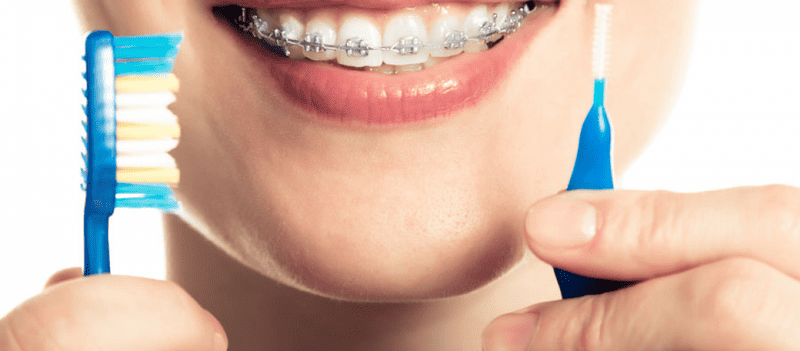
Orthodontic treatment works by applying steady, gentle pressure to teeth over months, so the bone around each root remodels and the tooth settles into a better position. Different appliances deliver that pressure in different ways, and which one suits a case depends on how far the teeth and jaws need to move.
Fixed appliances, the brackets and wires most people picture, stay on the teeth for the whole of treatment and can manage complicated movements. Removable clear aligners do the same work with a series of custom trays you take out to eat and to clean your teeth. Aligners suit many crowding, spacing, and mild to moderate bite cases, and they are far less noticeable day to day.
At Today’s Dental we provide Invisalign clear aligner treatment here in Grande Prairie. If your case calls for something we do not offer, we will say so plainly and point you toward the right care rather than stretch a treatment to fit.
What Happens at an Orthodontic Consultation
A consultation is a conversation and an examination. It is not a commitment to treatment.
We start by asking what you have noticed and what you would like to change, because that shapes everything that follows. Then we examine your teeth and gums, check how your bite comes together, and assess the health of the bone and tissue supporting your teeth. Dental x-rays show us the roots and the jaws, which the visible part of a tooth cannot tell us on its own. Photographs and a scan or impression record where things stand today, so any change later has something to be measured against.
After that we explain what we found, whether treatment is worth considering, roughly how long it would take, and what it would cost. You leave with a clear picture and no obligation. If waiting is the sensible choice, we will tell you that too.
Keeping Your Results
Teeth do not simply stay where treatment leaves them. The fibres and bone around each root need time to settle, and teeth drift slowly throughout life whether or not they have ever been straightened. Every orthodontic plan therefore ends with a retention stage that holds the new positions while everything stabilises. Ask what retention involves before treatment starts rather than after, so you know what you are committing to from the beginning.
Questions? Contact us today.
We understand that emergencies take top priority, which is why we go the extra mile to accommodate your emergency needs. If you’re experiencing a dental emergency and want to come in to see someone, call our office at (587) 803-8083, or simply: