Understanding the Three-Parts of a Dental Implant
Jump to Section:
The Implant Fixture: Your New Tooth Root
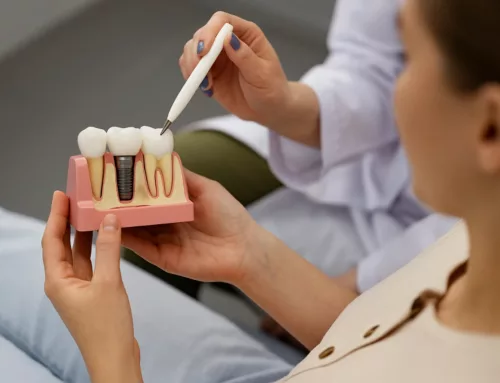
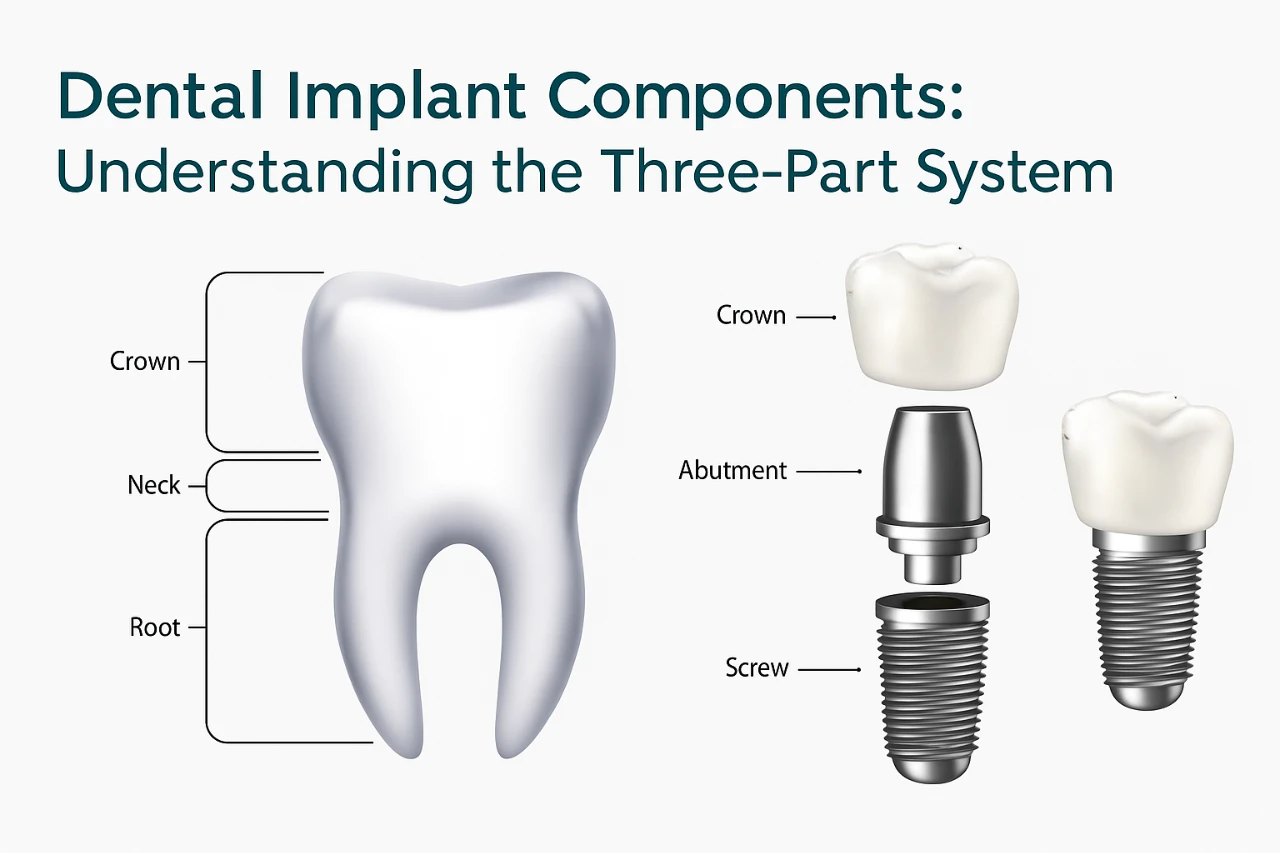
The implant fixture serves as the foundation of your new tooth. This titanium screw, typically 8–15 millimeters long, gets surgically placed into your jawbone where it replaces your natural tooth root. The fixture’s threaded design maximizes surface contact with your bone, promoting the osseointegration process that makes implants so stable.
Different fixture designs serve specific purposes. Straight fixtures work well in areas with adequate bone height, while angled fixtures help avoid anatomical structures like nerves or sinuses. The diameter varies too – wider fixtures provide more stability for back teeth that handle heavy chewing forces, while narrower ones suit front teeth where space is limited.
Your dentist selects the appropriate fixture size and design based on your bone structure, the tooth being replaced, and your individual healing characteristics. This customized approach helps maximize your implant’s long-term success.
The Abutment: The Critical Connection
The abutment connects your implant fixture to the visible crown. This middle component screws into the top of the healed implant, extending through your gum tissue to provide a stable platform for your restoration. Think of it as the prepared tooth structure that would support a traditional crown.
Abutments come in various materials and shapes. Titanium abutments offer strength and biocompatibility, while zirconia abutments provide better aesthetics in the front teeth where the abutment margin might show through thin gum tissue. Custom abutments can be designed to match your specific gum contours and bite requirements.
The abutment placement represents a minor surgical procedure. Your dentist reopens the gum tissue over the healed implant, removes a protective cover screw, and attaches the abutment. Some implant systems allow immediate abutment placement at the time of implant surgery, reducing the total treatment time.
The Crown: Your Visible Tooth
The crown represents the part of your implant that everyone sees – your new tooth. Made from materials like porcelain, zirconia, or porcelain-fused-to-metal, the crown restores both function and appearance. Modern dental technology allows crowns to match your natural teeth so precisely that even you might forget which tooth is the implant.
Crown attachment methods vary based on your situation. Screw-retained crowns attach directly to the abutment with a small screw, making them easily removable for maintenance or repair. Cement-retained crowns bond to the abutment with dental cement, similar to traditional crowns on natural teeth.
The crown design considers your bite forces, jaw movement patterns, and aesthetic preferences. For back teeth, durability takes priority with materials chosen for their strength. Front teeth crowns emphasize natural appearance with careful attention to color, translucency, and surface texture.
How the Components Work Together
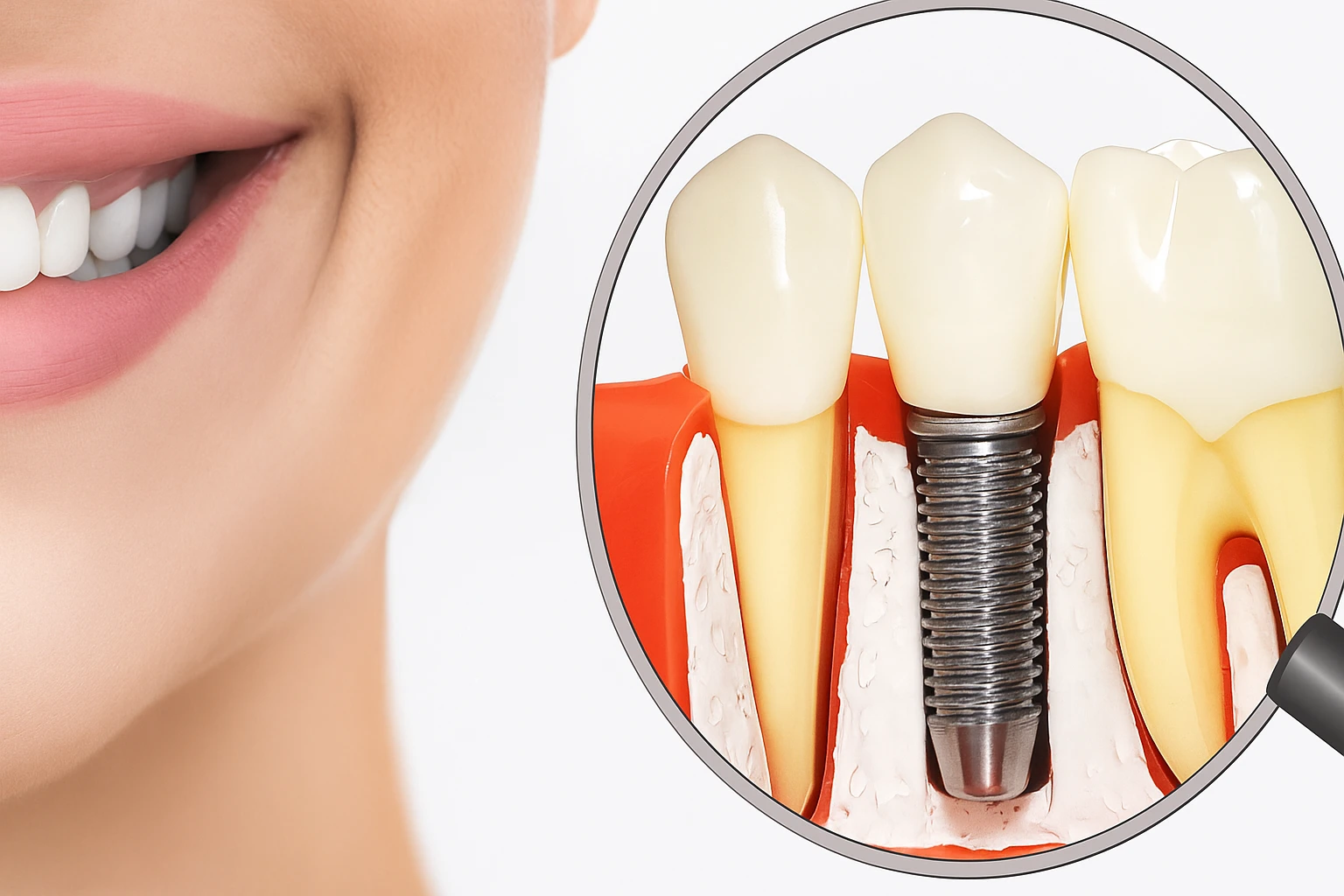
The three-part design offers significant advantages over single-piece implants. If your crown becomes damaged from trauma or wear, it can be replaced without disturbing the integrated fixture. Similarly, abutment problems can be addressed without implant removal.
This modular approach also allows treatment flexibility. Your dentist can place the fixture and allow healing while designing the perfect abutment and crown combination for your specific needs. Temporary restorations can provide function and aesthetics during the healing period.
The connection between components uses precision engineering. Internal hex connections, morse tapers, and other designs create stable, leak-resistant joints that prevent bacterial contamination and mechanical loosening.
Special Situations and Variations
Some cases require modifications to the standard three-part system. Immediate loading protocols might use temporary abutments and crowns while the fixture heals. All-on-4 dental implants use specialized abutments designed to support full arch restorations.
Mini implants, used in specific situations, combine the fixture and abutment into a single piece. While this simplifies placement, it reduces treatment flexibility compared to the traditional three-part system.
Computer-guided implant surgery allows precise component selection before surgery begins. 3D planning software helps determine optimal fixture placement and abutment angulation for the best crown emergence profile.
Maintenance and Longevity
Each component requires specific care to maintain long-term implant success. The fixture needs healthy surrounding bone and gums, achieved through good oral hygiene and regular dental cleanings. The abutment-crown connection requires periodic tightening to prevent loosening.
Professional maintenance includes checking component stability, cleaning around the abutment margins, and monitoring gum health. Your dental team uses specialized instruments designed specifically for implant care to avoid damaging the titanium surfaces.
Canadian Standards and Quality
Health Canada regulates all implant components as Class III medical devices, requiring extensive testing for safety and effectiveness. Canadian dental laboratories must meet strict quality standards when fabricating custom abutments and crowns.
Many leading implant manufacturers maintain Canadian facilities or partnerships, ensuring reliable component supply and support for your dental team. This infrastructure contributes to the high success rates Canadian patients experience with implant treatment.
Key Takeaway
Key Takeaway: The three-part dental implant system – fixture, abutment, and crown – works together to replicate your natural tooth structure completely. This modular design provides treatment flexibility, allows for repairs without implant removal, and enables customization for your specific needs. Understanding these components helps you appreciate why dental implants function so naturally and why they represent the most comprehensive tooth replacement option available. Each part plays a role in creating a restoration that looks, feels, and functions like your original tooth.
Interested in learning more about dental implant components and whether implants are right for you? Contact Today’s Dental Grande Prairie at 8200 100 St Unit 110, Grande Prairie, AB T8V 6H7 to schedule your consultation and discover how modern implant technology can restore your smile.